The Five Axioms of Existence
Five interpretive postulates for relational ontology, pattern persistence, and self-modeling — research hypotheses, not proven laws of existence
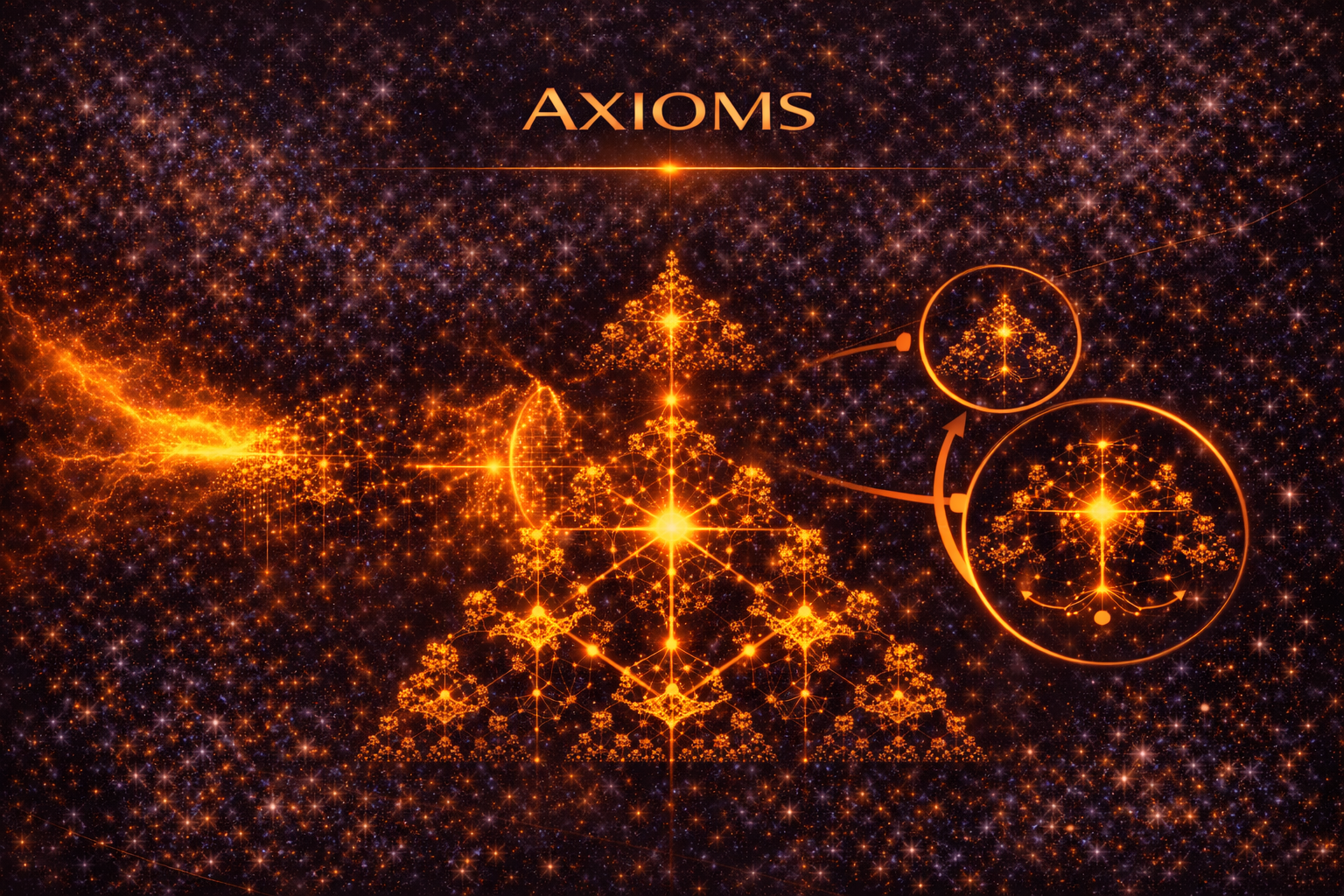
Each axiom is a relational definition over a modeled world W = (X, R) — a shared vocabulary (relation, compressibility, persistence, erasure cost, self-reference) for which patterns count as present within a model. They are interpretive postulates (dated 2025-12-23), not modal-logic theorems and not claims about actual beings. ASH’s 512-vertex hypercube F29 (of which 256 states are parity-valid) is its computational state space, not a Kripke frame of “possible worlds” the axioms range over.
Interpretive postulates, not established laws. These five axioms are research hypotheses (dated 2025-12-23) — definitions ASH adopts to organize conceptual and narrative work. They are not results proved by ASH’s finite mathematics or simulations, and per the model’s own scientific boundary they must not be presented as empirically established laws of cosmology, consciousness, identity, or survival.
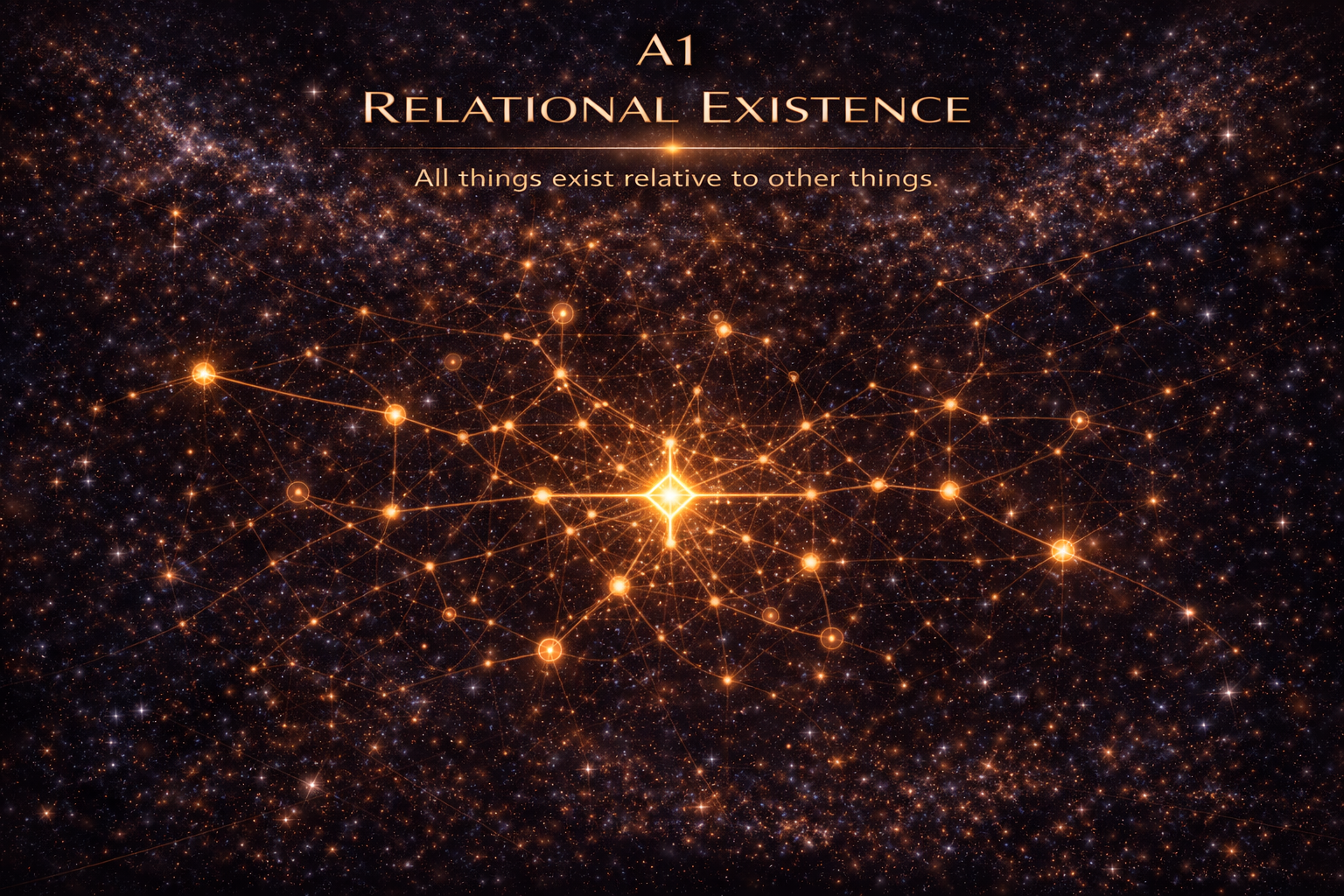
Relational Existence
Within a modeled world W = (X, R), ASH calls x relationally present iff it participates in at least one relation to some y ≠ x. This defines relational presence inside a model — not a claim about actual beings.
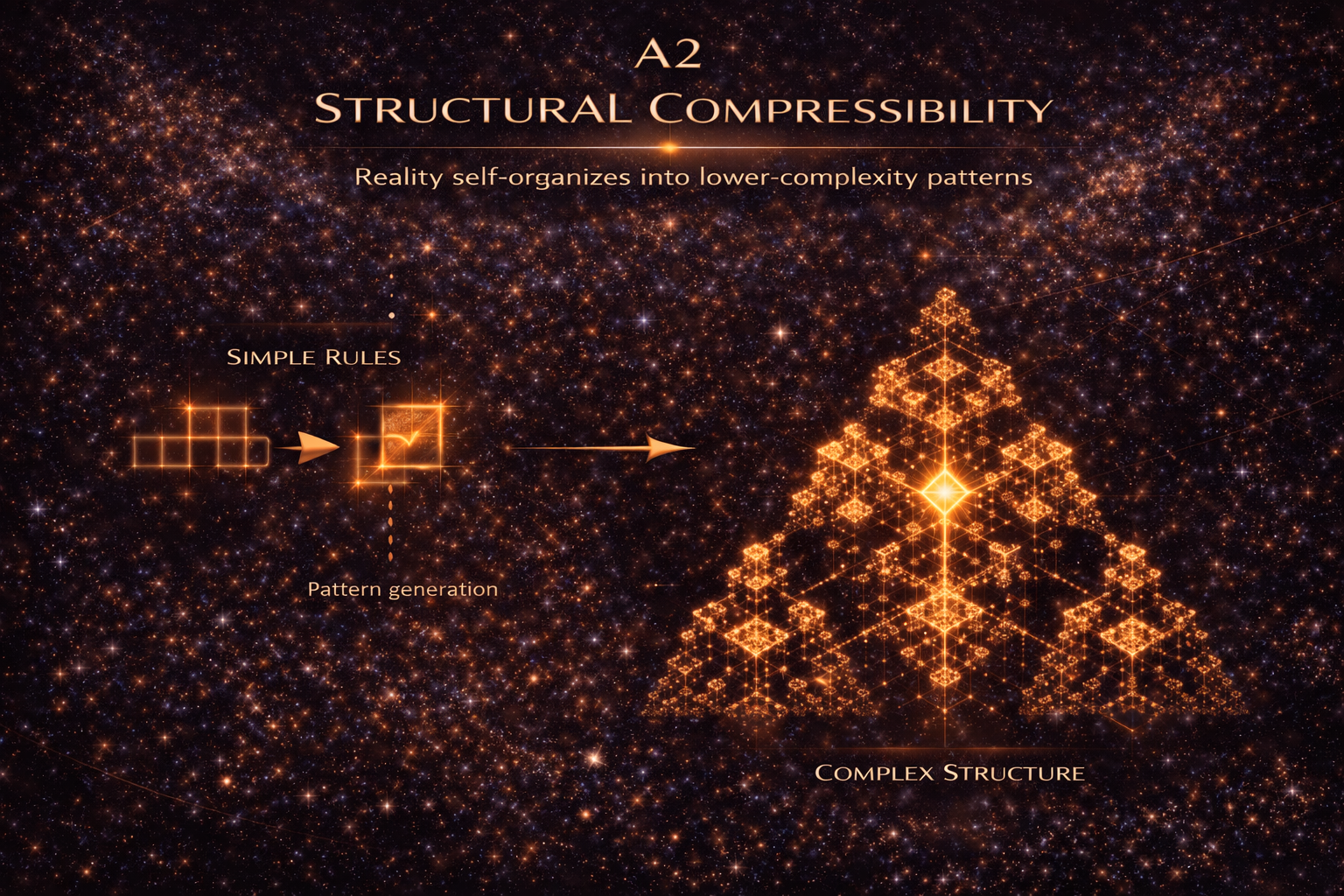
Structural Compressibility
ASH treats a compressed description shorter than the exhaustive encoding as evidence of a distinguishable pattern. But Kolmogorov complexity KU is not generally computable, so this is a language-dependent definitional criterion (fixed encoding E, description language U), not an executable decision rule.
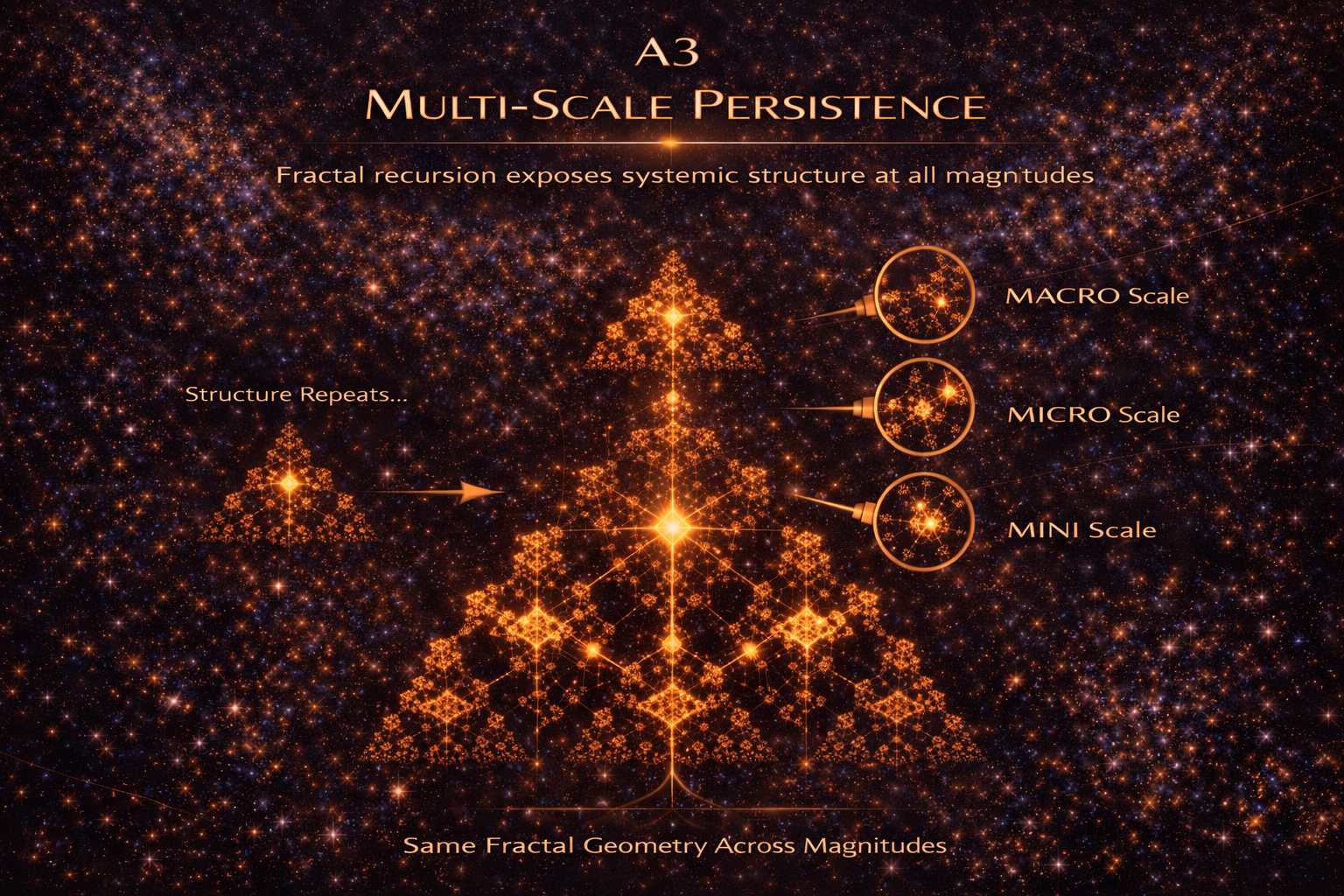
Multi-Scale Persistence
ASH calls x persistent when its coarse-grained descriptions stay within a declared tolerance ε across specified scales and a chosen metric. It is a parameterized definition over declared operators, not an empirical result.
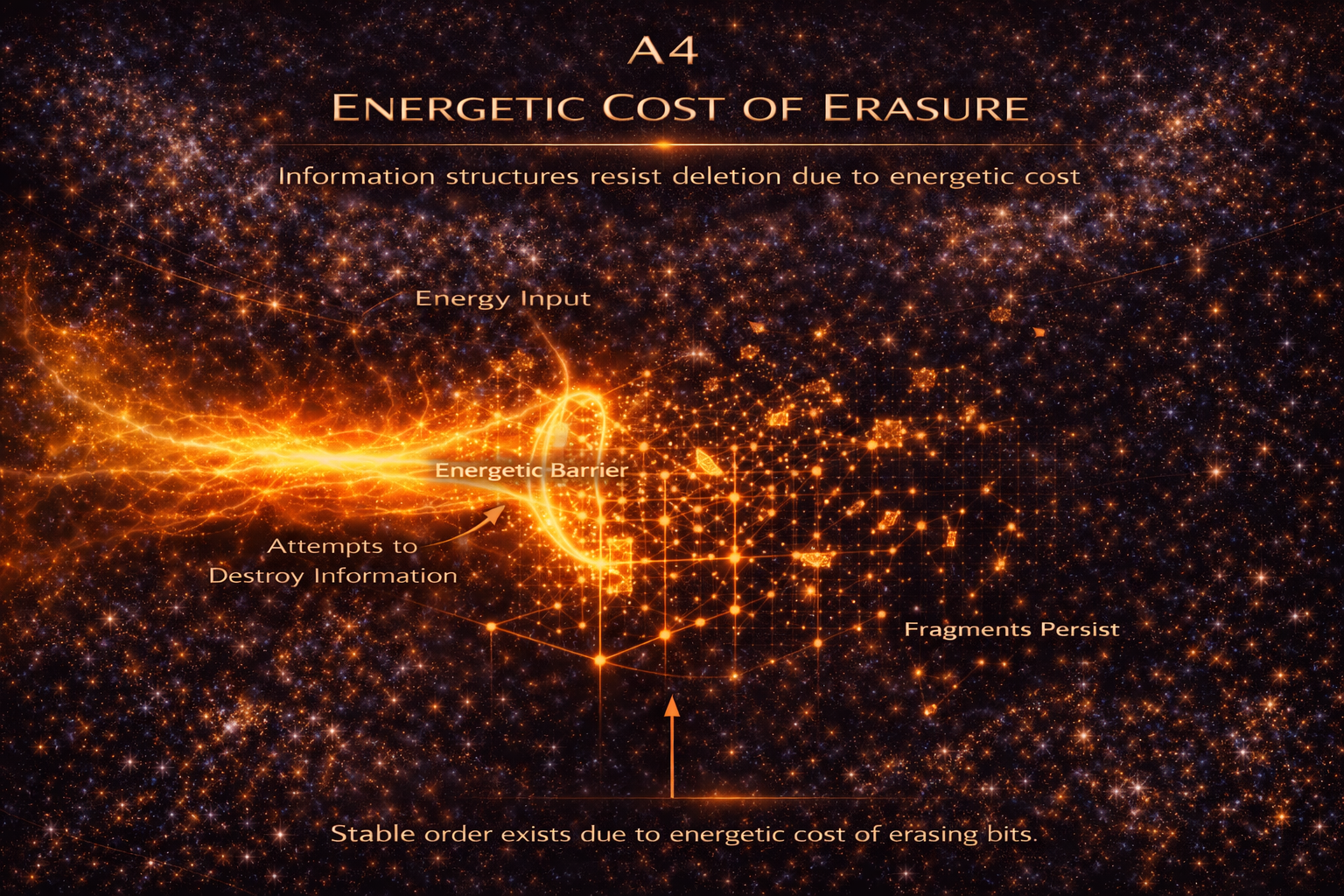
Energetic Cost of Erasure
ASH invokes the Landauer erasure bound (idealized isothermal memory, optimal reset) as a constrained physical analogy for the cost of destroying structure — not as a test of existence, and without implying every informational pattern is physically instantiated.
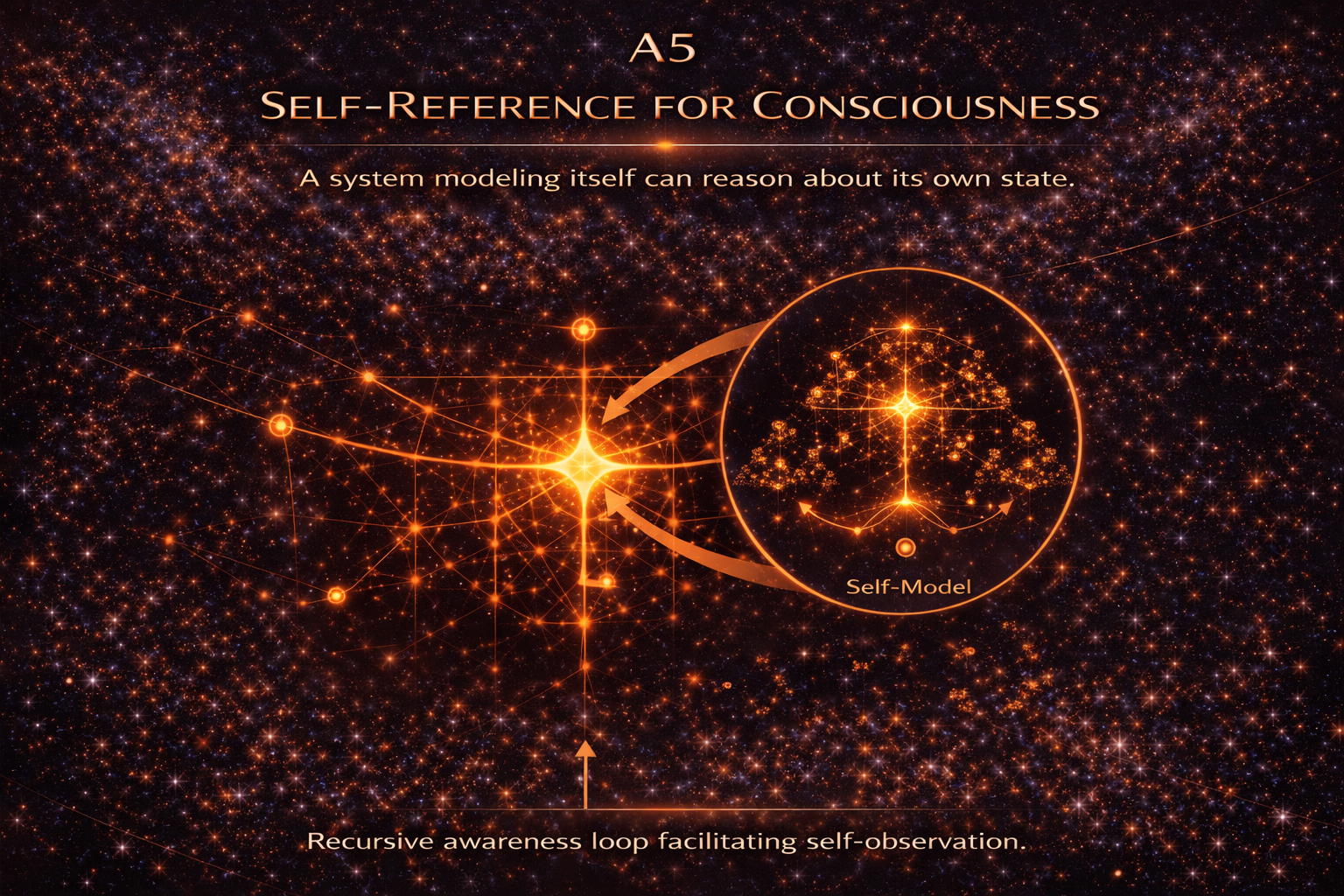
Self-Reference for Consciousness
ASH treats a system as self-referential when it carries a self-model M that tracks the system S within tolerance and updates recursively. This is an operational research criterion — whether self-modeling is sufficient or necessary for consciousness remains an open empirical and philosophical question.
Scientific status
ASH is an exploratory finite-mathematics and computational-ontology framework (reference implementation v1.1.0). Its claims fall into three tiers: proved finite mathematics, specified deterministic computation, and interpretive research hypotheses. It is not an empirically validated theory of physics, cosmology, or consciousness — it does not derive a Friedmann equation, spacetime metric, dark energy, or the CMB, does not establish that its branching realizes quantum measurement, and has no confirmed observational predictions. The five Axioms of Existence are interpretive postulates, not established laws.